About

LTC Matthew Corbett is Research Division Chief for AI Operations at the Army Cyber Institute, United States Military Academy at West Point. He received his Ph.D. in Computer Science from Virginia Tech in 2024, advised by Dr. Bo Ji in the SNAIL lab.
His research focuses on AI-enabled command and control, defense cybersecurity, privacy and security in augmented and mixed reality, and modeling and simulation of cyber battlefield effects. Current work spans agentic AI for cyber operations, multi-agent reinforcement learning for cyber conflict, and eye-gaze systems for bystander privacy and human–machine teaming.
He welcomes collaboration with researchers, practitioners, and students working on trustworthy AI for national security and operational cyber problems.
Selected Publications
-
2026
-
2026Cyber Defense Review AI · CyberGrand Challenges in Agentic AI for Cyber Operations: A Research Agenda
-
2026
-
2026
-
2026
-
2026De Gruyter Book Chapter · C2Artificial Intelligence and Automation to Support Situational Awareness and Military Decision-Making
-
2025
-
2025Modern War Institute C2 · UxVCommander's Intent for Machines: Reimagining Unmanned Systems Control in Communications-Degraded Environments
-
2025GDRKMCC C2 · SAAnalyzing the Impact of Improved Situational Awareness on Command and Control System Performance for Decision-Making
-
2024
-
2024Dissertation Virginia TechEnhancing Security and Privacy in Head-Mounted Augmented Reality Systems Using Eye Gaze
Research Themes

Command, Control and AI-Enabled Decision Making
Studying how improved situational awareness and information uncertainty affect command and control decision-making in AI-enabled military systems.
3 publications →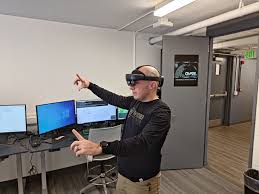
Modeling and Simulation for Cyber Battlefield Effects
Developing tools to model, correlate, and simulate cyber battlefield effects for experimentation and analysis.
1 publication →
Applications of AI in Cybersecurity
Applying AI to defense-focused cybersecurity problems including multi-agent reinforcement learning for cyber conflict and role-aligned AI governance.
3 publications →_K9I161vVzIS-EnTAXsYJv.jpg)
Privacy and Security in Augmented Reality
General privacy and security topics in AR, with a focus on eye-gaze enabled solutions for bystander protection and device pairing.
7 publications →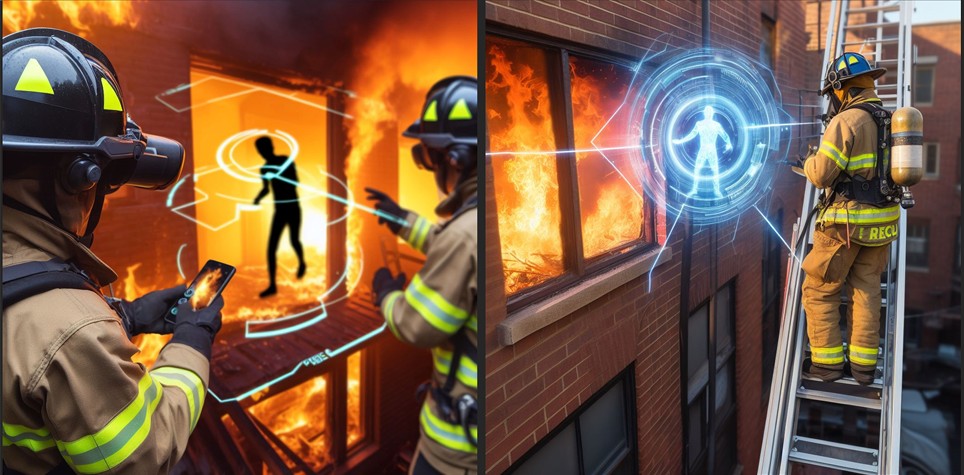
Sensemaking in Augmented Reality
Leveraging AR and gaze sensing for a more effective understanding of the physical world surrounding the user.
2 publications →